Thursday, November 22, 2012

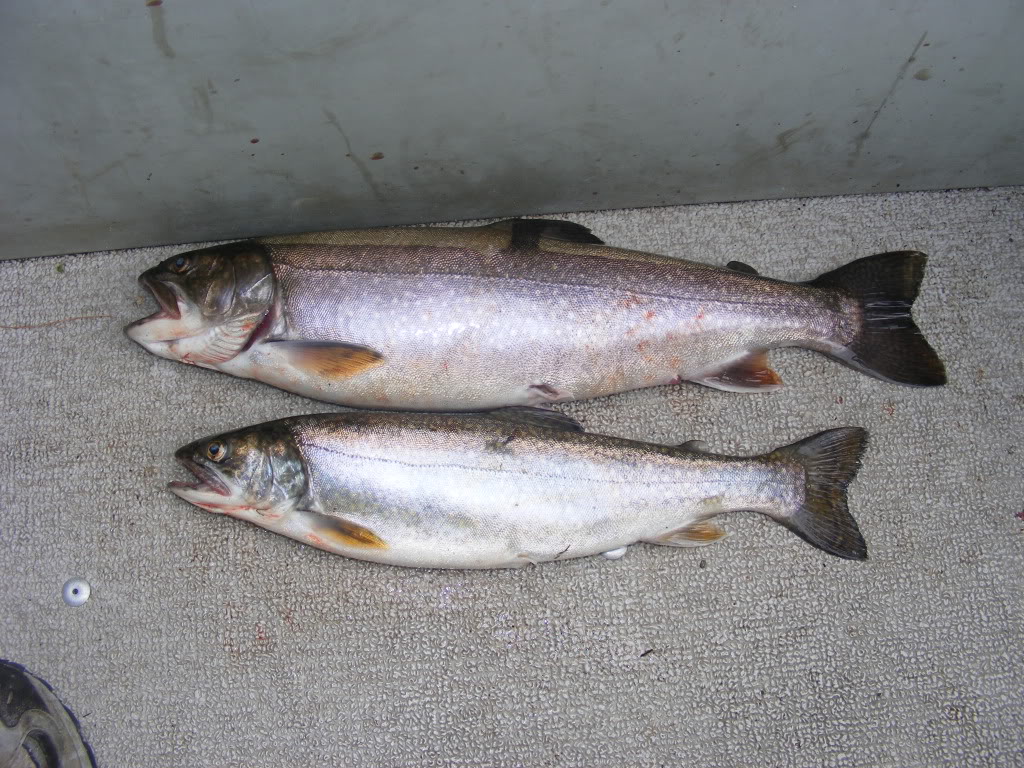
Keepers

We went fishing as a family this Thanksgiving for only the second time.  My wife doesn't actually fish, but she makes a great photographer.  You can check out her blog if you want.

Lilyhammer hides from the sun


Christina does not like fishing

The Menomonee River


Lilyhammer loves daddy's hat string

Amazing graffiti

...F stands for failure

Not the most scenic stretch of river

The fishing was slow and I didn't even have a bite, but I still have a couple of keepers.

Win Win

Should I go out and not catch any fish, or should I stay home and watch the Lions lose?

Tuesday, November 20, 2012

Beers, Brothers and Broken Rods

Earlier in the fall, my wife accidentally slammed my only remaining spinning rod in the trunk of our VW.  Me, seeing that the dashboard lamp indicating that the trunk was ajar, opened the trunk and slammed my rod in it again.
To be honest, I did not care much for the rod.  It was a Shakespear Tiger Spinning rod, available exclusively at Walmart.  It was cheap, and it brought in a lot of fish.  The rod was cracked pretty severely just below the female ferrule, but it wasn't totally broken; I was going to fish with it until it met its end.
I'd prefer to fly fish, but I will not fly fish with my 8 month old daughter on my chest-- I don't trust my fly casting ability-- and most opportunities I have to fish are with her when I take her for walks.  Despite the damage, the rod still landed some serious salmon out of the Menomonee River!  But finally, in the end, it was a 22" coho that did it in.  I still landed the fish.


My brother has been trying to make a trip to our side of the lake since August, but a new position at his job made finding a free weekend unpredictable.  After my rod broke, I told my dad and he has more gear than he knows what to do with in his mancave.  He had a couple of old rods that he was going to send with my brother when he finally came.  Shane usually has his head in the clouds, but he likes to get on the water occasionally when he's not flying.  We were planning hitting the Milwaukee for smallmouth in the summer, but salmon are prevalent in the Menomonee even so late in the fall.

Me and Shane, 2009

Shane after flying an Extra 300

Magician Lake Bass trip, 2012

Shane showed up late friday, we went to Cafe Hollander for beers and conversation.  after the beers, we skipped stones in the river for way too long before calling it a night-- it's so much more fun after a couple beers.  The next morning, I swapped the reel on one of the rods my dad sent for my nicer one.  Shane, Lilyhammer and myself walked out the front door and hit the Menomonee while my wife stayed home.  We walked for a mile or so before we saw fish, and then it wasn't long before I had one on.  I instantly asked Shane if he wanted to land the fish-- He had never caught a salmon.  He said "I don't not want to land the fish," or something along those lines.  Lily and I readied the net, Shane took the line.  Shane eventually brought the fish to the to the net, the fish came ashore, pictures were snapped and the fish was released.

Shane's salmon

He wanted to see me catch one, but I couldn't get another fish to bite.  That's fine though, I've caught a dozen or so this season.  There will probably be a couple more before the weather gets really cold, and then there is the spring steelhead run!

Friday, November 9, 2012

Never Underestimate The Power of The Dark Side

Egg sucking leeches are great flies.  They are just a variation on a Woolly Bugger, which is arguably the most effective streamer of all time.  There is, however, one variation that drives me crazy, and that is the bead head egg sucking leech.  Whether it happens or not, I can picture a leech creeping up through the river bed and latching onto a salmon egg; and I can picture how enticing this two course combo meal would be to a steelhead.  Like getting orange chicken and beef and broccoli at Panda Express!  But then if you throw a bead in there, I can't wrap my imagination around that.

I'm sure it works, but...

Enter my contribution to the fly tying world:  The Force Choking Leech!  I found some black cone head beads and got the idea to tie the egg onto the hook first with red thread, then whip finish it.  Then add a bead, but I put the bead on backwards.  


egg sucking leech

Next, I tie on black thread, tie in black marabou for the tail , black chenille and a black hackle feather for the body.


Wrap the chenille and the hackle forward towards the bead as you would a Woolly Bugger, and tie them off.  I wrap a lot of thread to build up a smooth taper onto the head, but I do that before tying in the extra stuff.


Whip finish the black thread just behind the bead and you're done.  Welcome to the Dark Side, now go choke some fish!

I came up with the name in that haze between sleep and consciousness, before the alarm goes off, but you know it's going to go off soon--  The black bead reminded me of Darth Vader's helmet.  From there, the "egg" is red, like Vader's lightsaber, and, the body is black, like the Sith Lord himself.

I haven't really tied a lot of these.  I'm going to experiment with some other bead colors, but I like the look of the all black and red.  Maybe olive with a gold bead and a black egg, who knows?

If you've never tied flies before, I'll discuss what is absolutely needed and what you can do without in a later post.  I also have a few flies that I will try to teach you to tie.  some are so easy, you probably won't even believe they catch fish.


Monday, November 5, 2012

Binders Full of Salmon

See what I did there?  But really, the history of members of the Family Salmonidae in the Great Lakes could fill several binders.  Most species that are common here now are fish that do not occur here naturally, while our native species are represented by diminished populations, hardly representational of their former abundance.  One species has even been driven to extinction.  As an angler, I think it is important to know the history of the fish you fish for to better appreciate them.  So I am going to consolidate binders full of history into a few paragraphs.

The only members of the Family Salmonidae that are native to the Great Lakes are the lake trout (Salvelinus namaycush), the brook trout (Salvelinus fontinalis), the atlantic salmon (Salmo salar), and the arctic grayling (Thymallus arcticus).
The arctic grayling population was decimated by the logging industry and by the stocking of nonnative species.  They have been extinct since the 1930s.  All efforts to reintroduce this beautiful fish to its native streams have failed.
The atlantic salmon was only native to Lake Ontario but they have been stocked in other Great Lakes tributaries with mixed results.  Torch Lake is still stocked with the atlantic salmon in Lower Michigan, and in Upper Michigan, the Saint Marys River between Lake Superior and Lake Huron is supposed to be just about the best atlantic salmon fishing on the continent.
Lake trout were driven to the edge of extinction by overfishing and invasion of the sea lamprey, but efforts to save the species have been successful, even though their population is a fraction of historical levels.
Brook trout are still found in native streams, and stocked in other streams outside of their native range. They only thrive in the most pristine waters, mostly in the upper portions of the Great Lakes and mountain streams.
I'm not sure, but I think some species of whitefish are native to the Great Lakes too.  Other than those few species, all others are nonnative.

Lake trout with lampreys attached

Brook trout

Atlantic salmon

Arctic grayling

The members of the Family Salmonidae that have been introduced into the Great Lakes are the brown trout (Salmo trutta), the rainbow trout (Oncorhynchus mykiss), chinook salmon (Oncorhynchus tshawytscha), coho salmon (Oncorhynchus kisutch), and pink salmon (Oncorhynchus gorbuscha) as well as a lake trout X brook trout hybrid that is commonly referred to as splake.
A German guy, the Baron Friedrich Felix von Behr helped introduce brown trout from his favorite streams of the Black Forest to the USA in the 1880s.  They were first introduced into a tributary of Lower Michigan's Pere Marquette River-- And then from there, just about every imaginable body of water in the nation.  In the Great Lakes, we have both stream resident brown trout, and lake run browns.
Rainbow trout were introduced in a similar fashion to brown trout starting around  the 1860s.  We also have stream resident and lake run rainbows.  Lake run rainbow trout are commonly called steelhead.  Steelhead are one of the most sought after fish in the Great Lakes.
Chinook and coho salmon were introduced into the Great Lakes originally in the 1800s, but they failed to thrive and eventually disappeared, probably because of mismanagement.  Again, chinook and coho were stocked in the Great Lakes to fill the apex predator role left vacant by the waning lake trout population starting in 1966.  With the lake trout on the verge of extinction, invasive species such as the alewife ran rampant, and annually, billions of alewives would die and wash up on the beaches of the Great Lakes.  This was not great for tourism.  But you know what is great for tourism?  Salmon fishing in the Great lakes!  Win win!
In the 1950s, pink salmon were planted in Lake Superior accidentally when about 100 tiny little yearling salmon escaped from a pen while they were being loaded onto a plane headed for Hudson Bay.  Then again, when about 20,000 "excess salmon" yearlings were "disposed of" in a sewage drain-- that led into a stream-- that fed into Lake Superior.  The idea was that the small fish would have no chance at survival amongst the predators of Lake Superior, let alone a sewage drain.  Pink salmon are pretty well established in the Great Lakes today.
Splake are raised in hatcheries and stocked in the Great Lakes almost strictly for sport fishing.  They are bred because they grow faster than either parent species and because they are highly unlikely to breed in the wild.  Since they are so unlikely to breed in the wild, the splake population is easy to control.

Great Lakes brown trout in spawning colors,
late summer 2008.

Great lakes brown in the spring of 2008.

Steelhead

Rainbow trout

One of the prettiest chinooks
I have ever caught,
late summer 2007.

I caught this fish in the spring of 2008.
I was never too sure, but I think it's a coho.

Coho

Spawning pink salmon

Splake

It can be pretty hard to identify some salmonids,
this is the guide that comes in the Wisconsin
trout and salmon rulebook.

When I was younger, I believed that the salmon we had in the Great Lakes had to swim all the way in from the Atlantic Ocean-- I just knew they came from the ocean.  Most people probably don't think twice about where the fish come from, or why they're here now.  It's a shame that our native species are so few in our lakes and streams, but we still have most species.  And I'm glad we have the introduced species for now.  Knowing about the history of these fish has made me more appreciative, this is why I practice catch and release the vast majority of the time.  In a later post, I'll talk about catching some of these beautiful fish.  There is nothing like the rush of catching your first chinook in a secluded wooded section of stream in the middle of nowhere.

Friday, October 5, 2012

I Don't Know How Much Longer I Can Hold This

All this time we've lived in our new apartment, I would always go upstream to fish the more natural stretches of the Menomonee River.  Keep in mind, "more natural" is a relative term, meaning, much less concrete and spray paint.

I had errands to run, which brought me near a park along the Menomonee about two miles farther downstream from where I usually fish.  I parked my car, got my gear,  jumped the wall, and saw fish everywhere.  Suckers, salmon and pike all over among the piles of "evidence" of so many unsolved, possibly unreported crimes.  Fish finding cover amongst skateboards, refrigerators, a stop sign, construction barrels, bicycles, chef's knives, chef's knives?  CHEF'S KNIVES!  I start casting, but it's a tough crowd.  The pike are amongst the suckers, why would they chase a swimbait?  I walked a ways up and down stream, amazed by the size of the fish I saw, but time was short, and after this, I knew where to find fish.  This kind of water is all new to me!  It reminds me of the motorcycle chase scene from Terminator 2.  The lower urban stretch is still within walking distance, I've always just been walking the wrong way, a return trip would be necessary.


A pair of northern pike.

Click to enlarge.
The weekend found me in the concrete canyon of the lower stretch of the Menomonee River an awful lot.  I had never seen another person down there, but apparently the word is out that the autumn salmon run has begun, despite the catastrophically low water levels.  Instinct can overcome low water, log jams, even miles of concrete and mounds of forensic evidence.  I wasn't ready to fish, I was just there to observe, as were many others.  I only saw one guy catch a fish, a beautiful female.  Saturday evening while walking with my baby in the carrier, we found a sweet fossil.  Weekends are always crazy for salmon fishing, I waited to wet my line until monday.

This guy caught her on a spawn sack.

Pretty awesome trilobite fossil.

Catching a salmon on a fly was something I've always wanted to do, so I tied some egg sucking leeches over the weekend.  I waited until mid morning to hit the stream with my gear, there were salmon everywhere -- and I had the stream to myself.  It wasn't long before I was hooked up with a big female.  She was tired, but still had some spirit!  I landed her and released her above the rapids she was struggling to get over.  A male followed, also released above the rapids.  The third fish fought the hardest; a nice male that ran downstream, forcing me into a thousand yard chase; the concrete bank makes for a great sidewalk.  The fish eventually tired and came in.

One of my hand tied #6 egg sucking leeches.

Fish on!

Nice female

Not as pretty as the female.

Action shot, I was just along for the
ride with this guy.

I love the color of
a spawning male

Resusitating the fish.

Such a beautiful sight, seeing
him swim away,

Three fish landed on the fly, three fish released.  What a great way to start the week.  I followed it up by catching and releasing three more Tuesday on spinning tackle with my baby girl, landing two of them by hand.  All of them were caught on Thundersticks.  One had a gold Little Cleo stuck in its tail that I took out.  Wednesday, I caught and kept a 34" female.  Seven fish in three days, those accomplishments are coming along pretty nicely.

34" salmon 

Achievements unlocked
  1. (*) Gold Hook (Catch a game fish over the minimum length requirement)
  2. (*) Baby Bear (Catch a member of the family: Salmonidae)
  3. (*) Mama Bear (Catch a member of the family: Salmonidae that measures over 30")
ITEM Pickups
  1. GOLDEN LITTLE CLEO
  2. TRILOBITE FOSSIL

Monday, October 1, 2012

Skunked

Last week I got to spend an evening with my beautiful little girl.  She loves being outside, and I had not taken her fishing yet, so I decided we needed to find out if the salmon were running in the Menomonee River yet; maybe I could unlock some of those remaining achievements.  She's just six months old, so I wasn't planning on doing any really serious fishing.
After her nap, we made the two and a half mile trip to the more natural stretch of the river, and she was already being fussy and crabby.  I put her in the carrier on my chest, grabbed my gear out of the trunk and walked to the river.
This picture was taken at an earlier date,
the water is even lower now.
The water is terribly low still, but there is a pool where the water cascades over rock, if there are salmon this far up, they will be bottlenecked up in the pool for sure.  My little angel had a good time when we got to the bank, she loves the water, and there were some ducks and frogs for her to see.
I didn't anticipate how much wearing a baby on my chest would effect my cast, but I still managed to get my lure where I wanted it.  I think my girl's favorite part of fishing was watching the reel spin as I retrieved my line.
I managed to fish for ten or fifteen minutes before baby turned into crabby pants and we stopped fishing without so much as seeing a single fish.  We started walking, and she calmed right down, so I dropped the gear back in the trunk and hit the nature trails.  My sweetie fell asleep instantly, I continued to explore the beautiful Jacobus park as she napped.
Tiny stream.

Very nice trails in the park.


She wakes up! 

Baby had a fun time

She eventually woke up and was a happy, cute little angel.  Even though I got skunked, that was the best fishing yet this season.